
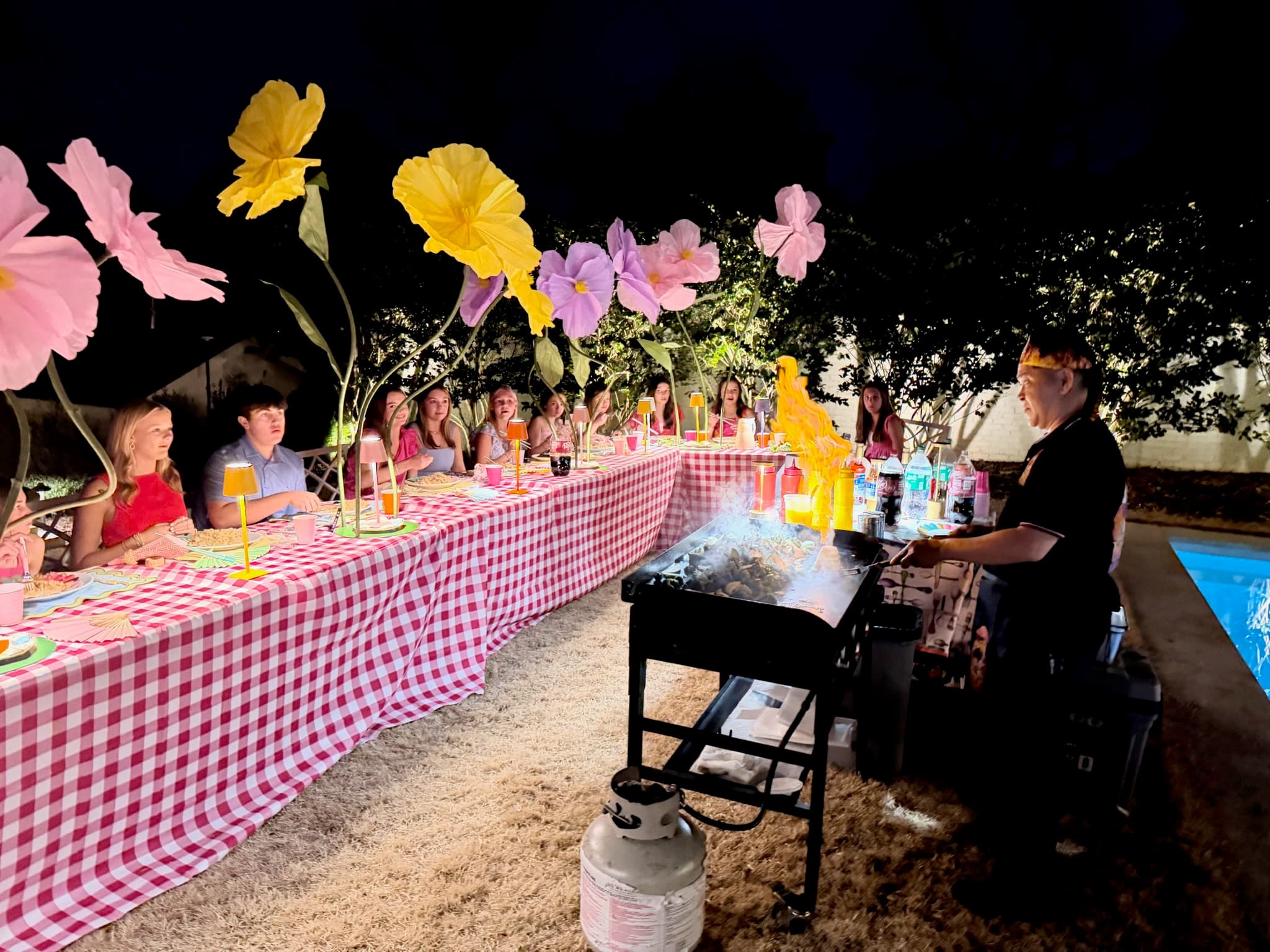
One of the most common questions we hear is: "Will this actually work at my house?" The answer, almost always, is yes. Private hibachi catering is designed to work in normal residential spaces — not restaurant kitchens. Our chefs bring everything needed to cook a full teppanyaki meal on-site, and your job is simpler than you think. This guide walks you through the complete hibachi at home setup so you know exactly what to expect, what we handle, and what you need to prepare.
What We Bring to Your Hibachi at Home Setup
When you book with HibachiLover, our chef arrives fully equipped. You are not responsible for sourcing cooking gear, food, or supplies. Here is exactly what our hibachi catering setup includes:
- Professional flat-top teppanyaki grill — a commercial-grade propane-powered griddle designed for outdoor cooking, the same type used in hibachi restaurants
- All cooking equipment — spatulas, teppanyaki knives, squeeze bottles, oil, seasonings, and everything our chef needs to perform and cook
- Proteins — chicken, steak, shrimp, and salmon (depending on your selected package), pre-portioned for your guest count
- Fried rice and noodles — cooked fresh on the grill right in front of your guests
- Fresh vegetables — zucchini, onions, mushrooms, broccoli, and more, all sliced and ready to cook
- Signature sauces — yum yum sauce, ginger sauce, soy sauce, and teriyaki, prepared in-house
- Plates, utensils, and napkins — disposable dinnerware for every guest so you do not need to worry about dishes
- Full cleanup — when the meal is done, our chef packs up all equipment, disposes of waste, and leaves your space clean
In short: we bring the entire restaurant to you. Your guests eat a freshly cooked, multi-course hibachi meal and you do not have to lift a finger in the kitchen.
What You Need to Provide
Your part of the hibachi at home setup is straightforward. Here is what we ask you to have ready before the chef arrives:
- An outdoor space — 10x10 feet minimum — this gives the chef room to set up the grill, prep station, and a small serving area safely
- Seating for your guests — chairs, benches, or any arrangement where your group can sit and eat comfortably; guests typically gather around the grill to watch the show, then sit to eat
- Access to a power outlet (if needed) — most setups run entirely on propane, but in some cases a nearby outlet is helpful for lighting or ancillary equipment
- A table or folding table for serving — one standard 6-foot folding table works perfectly as a staging area for plates, sauces, and drinks
That is it. You do not need to buy food, rent equipment, or prepare your kitchen. The entire hibachi catering setup is built around making this as easy as possible for the host.
Space Requirements by Group Size
Wondering what do I need for hibachi at home when it comes to space? The amount of room you need scales with your guest count. Here is a general guide:
- 10–15 guests: 10x10 feet for the cooking area, plus enough room for a small seating arrangement nearby — a standard patio or driveway works perfectly
- 16–25 guests: 12x12 feet for the cooking zone is ideal, with a separate seating area; a backyard with a patio and lawn handles this comfortably
- 26–40 guests: 15x15 feet or more recommended for the grill setup, and you will want dedicated seating space such as rented tables and chairs spread across a yard or driveway
- 40+ guests: larger events may require two grill stations and additional space; request a custom quote and our team will help you plan the layout
If you are unsure whether your space is big enough, send us a photo of your yard or patio when you request your quote. We have set up at hundreds of homes and can quickly tell you whether your space works and how to arrange it.
Best Locations at Your Home for Hibachi
Not every hibachi at home setup looks the same. The best spot depends on your property and your guest count. Here are the most popular locations our chefs set up at:
Backyard Patio
This is the most common setup. A concrete or paver patio gives the chef a flat, stable surface for the grill. Guests can sit at nearby patio furniture or at tables on the lawn. If your patio is covered, even better — it provides shade and light rain protection.
Driveway
Driveways are an underrated option, especially for larger groups. They are flat, spacious, and easy to clean. Many hosts set up folding tables and chairs in the driveway and turn it into an outdoor dining area for the evening. It works surprisingly well and gives the chef plenty of room.
Garage with the Door Open
If weather is a concern, an open garage is a solid backup plan. The key requirement is ventilation — the garage door must stay fully open throughout cooking, and ideally there is airflow from a second opening or fan. This setup keeps everyone dry while still allowing smoke and heat to dissipate safely.
Pool Deck
Pool deck hibachi is a crowd favorite for summer parties. Guests swim, hang out by the pool, and gather around the grill when it is time to eat. Make sure the grill has a flat, stable section of the deck (not directly on pool coping) and that there is at least 10 feet of clearance from the pool edge for safety.
Covered Patio or Lanai
A covered patio or screened-in lanai works well as long as ventilation is adequate. The roof provides weather protection, and the open sides allow smoke to clear. This is a popular setup in southern states where afternoon rain showers are common but the covered space stays dry.
Weather Considerations for Hibachi at Home
Since hibachi at home is primarily an outdoor experience, weather matters. Here is how we handle different conditions:
- Light rain: A covered patio, pop-up canopy, or open garage keeps things running smoothly. Our chefs are experienced with light rain and can cook through it with overhead cover.
- Heavy rain or storms: Safety comes first. If severe weather is forecast, we will work with you to reschedule or move the setup to a covered area. We monitor forecasts leading up to your event and communicate early if adjustments are needed.
- Extreme heat: Summer events are our busiest season, and our chefs are used to cooking in the heat. Provide shade for your guests if possible, have cold drinks on hand, and consider a late afternoon or evening start time when temperatures drop.
- Cold weather: Hibachi works year-round. The grill generates significant heat, and guests tend to gather close to watch the show. For winter events, consider a garage setup or a covered patio with space heaters for the seating area.
- Wind: Moderate wind is fine. In high-wind conditions, a sheltered location (between buildings, against a fence, inside a garage) helps keep the cooking consistent and prevents napkins and plates from blowing around.
The bottom line: weather rarely cancels a hibachi event. With a little planning, there is almost always a way to make it work.
Indoor Hibachi: Is It Possible?
We get asked about indoor hibachi at home setups regularly. The short answer is: it depends on ventilation. Cooking on a propane flat-top grill produces smoke, grease vapor, and heat that need somewhere to go. A fully enclosed indoor room without ventilation is not safe or practical.
Indoor setups that can work include:
- A large room with multiple windows and doors that can be opened wide
- A space with a commercial-grade exhaust hood or ventilation system
- A garage with the door open (technically semi-indoor)
- A screened porch or three-season room with open panels
If you want to explore an indoor option, let us know when you request your quote and describe the space. We will tell you honestly whether it is feasible. In most cases, the best approach is a covered outdoor area rather than a fully enclosed room.
Timing: What to Expect on Event Day
Understanding the timeline helps you plan the rest of your event. Here is how a typical hibachi at home experience unfolds:
Chef Arrival: 30–45 Minutes Before Showtime
Your chef arrives well before the scheduled cooking time. During this window, the chef unloads equipment, sets up the grill, arranges the prep station, and gets everything heated and ready. You do not need to help — just show the chef where to set up and make sure the space is clear.
The Hibachi Show: 1–2 Hours
Once cooking begins, the chef puts on a full teppanyaki performance. For smaller groups of 10–15, the show and meal typically take about an hour. For groups of 20–30, expect closer to 90 minutes. For large events of 30 or more, the cooking experience can run up to two hours as the chef works through multiple rounds to make sure every guest is served hot, fresh food.
During this time, guests gather around the grill to watch the fire tricks, knife skills, and cooking techniques. It is interactive, entertaining, and the centerpiece of your event. Kids love it. Adults love it. Everyone eats extremely well.
Cleanup: 15–20 Minutes
After the last plate is served, the chef handles all cleanup. Equipment is packed up, the cooking area is wiped down, and all waste and disposables are collected. Your space is left clean — no grease stains, no leftover equipment, no mess for you to deal with the next morning.
Tips to Make Your Hibachi at Home Setup Perfect
Based on hundreds of events, here are the practical tips that experienced hosts follow:
- Clear the space in advance. Move patio furniture, toys, and anything else out of the cooking zone before the chef arrives. A clear 10x10 area speeds up setup significantly.
- Set up seating before the chef arrives. Arrange chairs and tables so guests have somewhere to sit when food starts coming off the grill. You do not want to be scrambling for chairs during the show.
- Tell your guests to come hungry. Portions are generous. A full hibachi meal includes soup or salad, fried rice, noodles, vegetables, and proteins. Most guests are completely full by the end.
- Have drinks ready separately. We handle the food — you handle beverages. Set up a drink station or cooler away from the cooking area so guests can help themselves without crowding the chef.
- Let the chef know about allergies in advance. When you book, tell us about any dietary restrictions. Our chefs accommodate allergies and can adjust the menu as needed.
- Consider background music. A Bluetooth speaker with a chill playlist sets the mood while the chef cooks. Keep the volume moderate so guests can hear the chef and each other.
- Relax and enjoy it. This is the whole point. You hired a professional so you do not have to cook, serve, or clean up. Be a guest at your own party.
How Much Does Hibachi at Home Cost?
HibachiLover's hibachi catering starts at $55 per person with a $550 minimum (about 10 guests). That price covers the chef, all food, cooking equipment, the live show, and cleanup — you just provide tables, chairs, plates, and drinks. There are no hidden fees for equipment rental or setup — it is all included.
For a detailed breakdown of what each package includes, check out our packages page. To see if we serve your area, visit our service areas page — we currently cover 30 states across the country.
Frequently Asked Questions About Hibachi at Home Setup
Do I need a special grill or cooking equipment?
No. We bring a professional flat-top teppanyaki grill and all cooking equipment. You do not need to own or rent anything.
What if it rains on the day of my event?
Light rain with a covered area is fine. For heavy storms, we work with you to reschedule or relocate the setup. We communicate early so there are no surprises.
Can I have hibachi inside my house?
Only if there is adequate ventilation — open windows, open doors, or an exhaust system. Fully enclosed indoor spaces are not suitable for propane grill cooking. A garage with the door open or a screened porch are good compromises.
How early should I book?
As early as possible. Weekends fill up fast, especially during summer months and holidays. Booking 2–4 weeks in advance is ideal, though we can sometimes accommodate shorter notice depending on availability.
What if I have fewer than 10 guests?
The $550 minimum covers groups smaller than 10. You can absolutely book for 6–8 people — you will just pay the minimum rather than a per-person rate.
Ready to Set Up Your Hibachi at Home?
Now you know exactly what is involved: we bring the grill, the food, the chef, and the show. You provide the space and the guests. It works in backyards, driveways, pool decks, covered patios, and even open garages. Rain or shine, summer or winter, big group or small — hibachi at home works at almost every house we visit.
The next step is simple. Get your free quote now — tell us your date, location, and guest count, and we will send you pricing and confirm availability. Your guests are going to love this.