If you've never been to a hibachi restaurant — or you're planning a private hibachi event for the first time — you might be wondering exactly what "hibachi food" means. What do people eat? What are the options? What's included versus what costs extra?
Here's a complete breakdown of the hibachi menu, from the basics to the premium upgrades.
The Core Hibachi Meal
A standard hibachi meal is built around a few key components that every guest receives:
1. Protein (Your Choice)
The centerpiece of any hibachi meal is the protein — cooked fresh on the flat-top grill right in front of you. At most hibachi catering events, adults choose two proteins and kids choose one. Standard protein options include:
- Chicken — the most popular choice, cooked in garlic butter and soy sauce
- Steak — typically sirloin or NY strip, sliced and cooked to your preference
- Shrimp — large shrimp cooked quickly over high heat
- Salmon — a lighter option, often cooked with lemon and butter
- Scallops — seared to a golden crust
- Tofu — a vegetarian option that absorbs the garlic butter and soy flavors well
Each protein is seasoned and cooked to order, so guests can mix and match. Chicken and shrimp together is a classic combination. Steak and scallops is a popular upgrade pairing.
2. Hibachi Fried Rice
Hibachi fried rice is one of the most distinctive parts of the meal. It's cooked on the flat griddle with egg, soy sauce, butter, garlic, and onion — all mixed and tossed together right in front of you. The high-heat cooking gives it that slightly crispy texture that's hard to replicate at home. It's savory, rich, and nothing like takeout fried rice.
3. Hibachi Vegetables
The vegetable mix typically includes zucchini, white onion, mushrooms, and broccoli — all cooked on the griddle in garlic butter. They're seasoned simply so they don't compete with the protein, but the garlic butter and high heat make them genuinely delicious, not an afterthought.
4. Garden Salad
Most hibachi meals include a simple garden salad — mixed greens, cabbage, and vegetables — served with a light ginger dressing. It's a fresh, palate-cleansing starter before the main event.
5. Signature Sauces
The sauces are what tie the whole hibachi meal together. Two are standard at virtually every hibachi event:
- Yum yum sauce (also called white sauce or shrimp sauce) — a creamy, slightly sweet mayo-based sauce with a mild kick. This is the sauce most people are addicted to.
- Teriyaki sauce — a sweet soy-based glaze that pairs especially well with chicken and steak
Some chefs also bring ginger sauce (similar to the dressing on the salad) and a mustard-based dipping sauce. The yum yum sauce tends to be the crowd favorite, and guests often ask for extra.
Premium Protein Upgrades
Beyond the standard protein menu, hibachi events typically offer premium upgrades for guests who want to elevate their meal:
- Filet mignon (+$5 per serving) — tender, buttery, and widely considered the best steak cut for hibachi cooking
- Lobster tail (+$10 per serving) — split and cooked on the griddle in garlic butter, it's a showpiece protein that turns any meal into something special
Premium upgrades are per-guest, so if 5 people want filet mignon, you'd add 5 upgrades. You don't have to upgrade everyone — it's completely flexible.
Appetizers and Add-Ons
In addition to the main meal, most hibachi caterers offer optional extras:
- Gyoza ($8) — pan-fried Japanese dumplings, usually pork or vegetable filled, with a crispy bottom and juicy interior
- Edamame ($5) — steamed and salted soybeans, a light and popular starter
- Stir-fried noodles ($5) — an alternative or addition to the fried rice, cooked with similar seasonings
What About Dietary Restrictions?
Hibachi is more accommodating than most people expect:
- Gluten-free — swap soy sauce for tamari and skip the gyoza. Most of the meal is naturally gluten-light.
- Vegetarian — tofu is a full protein option. The rice and vegetables can be made without meat-based seasonings.
- Dairy-free — garlic butter is standard, but a good chef can cook with oil instead
- Shellfish allergies — easy to accommodate by avoiding shrimp, scallops, and lobster and cooking on a separate section of the grill
When you book with HibachiLover, let us know about any allergies or restrictions and we'll plan accordingly.
How Much Hibachi Food Do You Get?
Hibachi portions are generous. Two proteins cooked to order, a full serving of fried rice, a full serving of vegetables, a salad, and unlimited sauce is a complete, satisfying meal. Most guests leave full. Large eaters can add the extra protein add-on or order more fried rice as an extra.
For kids 12 and under, the meal is the same but with one protein instead of two — sized appropriately for younger guests.
Ready to Experience Hibachi Food at Your Home?
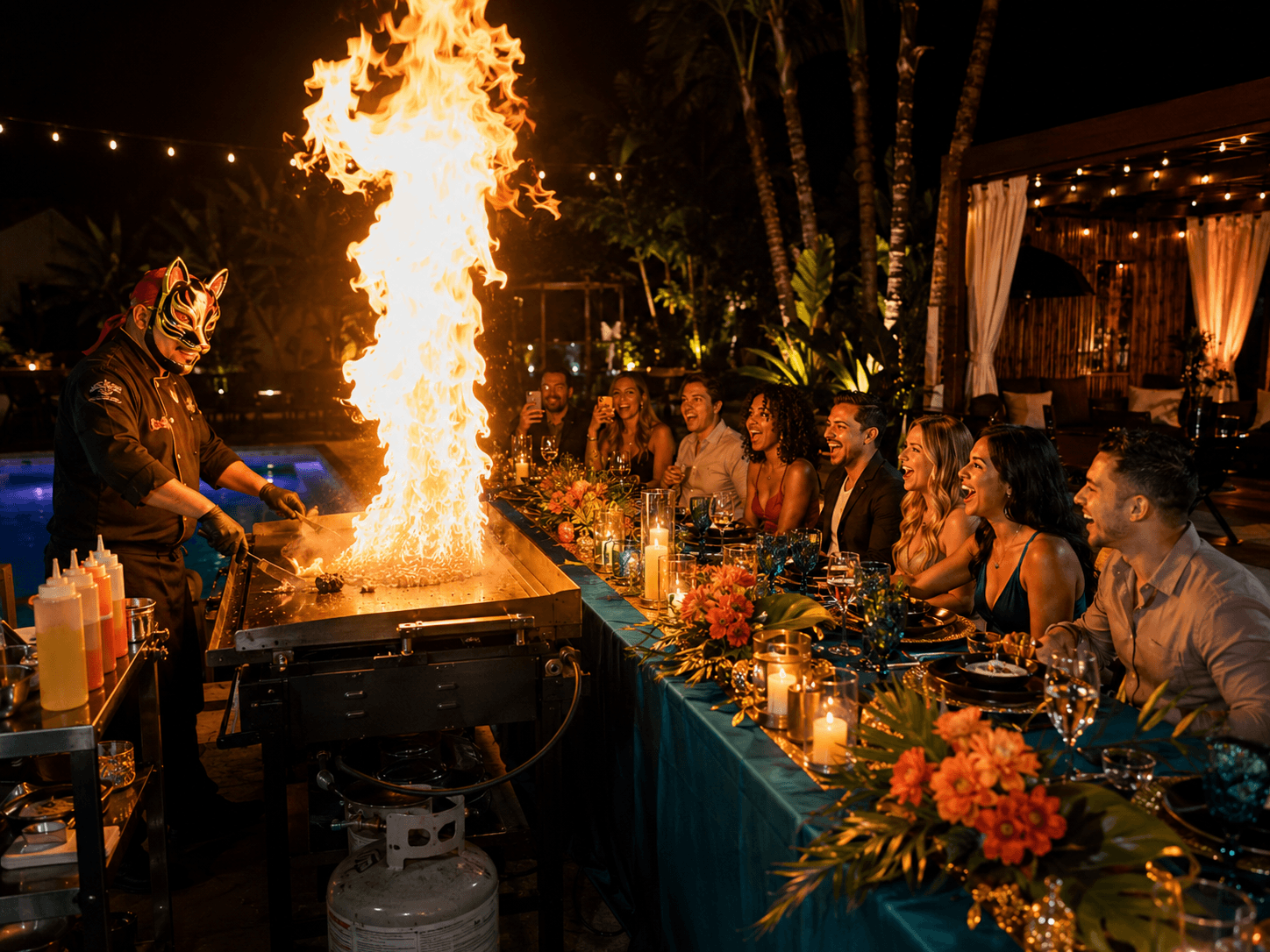
Private hibachi catering brings the full menu — proteins, fried rice, vegetables, salad, and sauces — directly to your backyard or event space. Our chefs handle everything. You just show up and eat.
Pricing starts at $55 per adult and $30 per child, with a $550 minimum. Get an instant estimate for your event, or book your date online. We serve 27 states.