
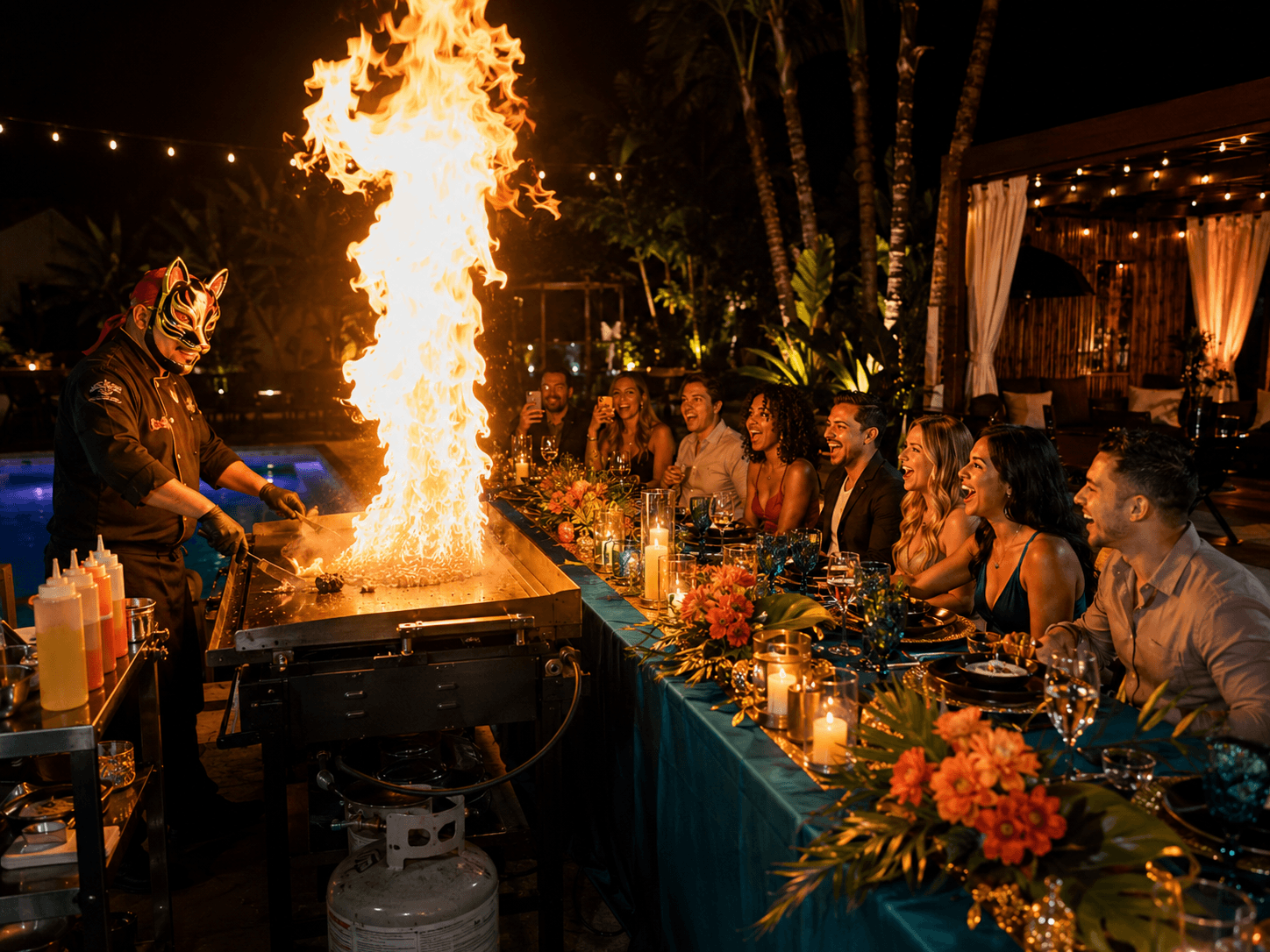
If you've ever sat around a sizzling grill while a chef flipped shrimp into their hat, you've experienced what most Americans call "hibachi." But here's the thing: what you watched wasn't technically hibachi at all. It was teppanyaki. And the real history behind hibachi is a lot more interesting than most people realize.
The True Meaning of Hibachi
The word hibachi (火鉢) is Japanese and translates literally to "fire bowl." Traditionally, a hibachi was a small, open-topped container — usually made of ceramic, wood, or cast iron — filled with burning charcoal. It was used for heating rooms in Japan, not for cooking full meals tableside.
Real hibachi grills in Japan are simple, portable charcoal braziers. They were used for centuries as a primary heat source in Japanese homes and are still used today for small-scale grilling — things like yakitori (skewered chicken) or grilling fish. The key word is small. Traditional hibachi is nothing like the large flat-top grills you see at Japanese steakhouses in the U.S.
So What Is Teppanyaki?
What most Americans call "hibachi" is actually teppanyaki — a style of Japanese cooking that uses a large, flat iron griddle (teppan) over high heat. The word breaks down as: teppan (iron plate) + yaki (grilled or broiled).
Teppanyaki cooking was popularized in the United States by Benihana, which opened its first restaurant in New York City in 1964. Benihana's founder, Hiroaki "Rocky" Aoki, built the concept around theatrical tableside cooking — chefs performing knife tricks, onion volcanoes, and egg rolls while cooking directly in front of guests. The word "hibachi" was used loosely in American marketing, and it stuck.
Today, "hibachi" in American English refers almost universally to the teppanyaki experience: a chef cooking on a large flat grill in front of diners, with some entertainment mixed in. That's what we do at HibachiLover, and that's what this article is about when we use the word going forward.
What Does a Hibachi Meal Include?
A traditional hibachi (teppanyaki) meal in the U.S. typically includes:
- Protein — chicken, steak, shrimp, salmon, scallops, tofu, or premium options like filet mignon and lobster tail
- Hibachi fried rice — cooked on the griddle with egg, soy sauce, butter, and vegetables
- Hibachi vegetables — zucchini, mushrooms, onions, and broccoli cooked in garlic butter
- Garden salad — usually served with ginger dressing
- Signature sauces — yum yum sauce (a creamy mayo-based sauce) and teriyaki sauce are the most common
At a private hibachi event with HibachiLover, each adult gets two proteins of their choice, cooked to order. Kids get one protein. Premium upgrades like filet mignon and lobster tail are available as add-ons.
What Makes Hibachi Different From a Regular Cookout?
The big difference is entertainment. A hibachi chef isn't just cooking — they're performing. Knife tricks, flaming onion volcanoes, egg juggling, shrimp tosses into guests' mouths — the show is half the point. This is what makes hibachi such a popular choice for private events. Your guests aren't just eating; they're watching something happen in front of them.
Compare that to a backyard BBQ where someone stands at a grill with their back to the crowd, and the difference is obvious. Hibachi flips the script — the chef faces the guests, interacts with them, and turns the cooking process into the entertainment itself.
Is Hibachi Japanese?
Yes — both hibachi and teppanyaki are rooted in Japanese cooking tradition. The fire bowl (hibachi) has been part of Japanese culture for over a thousand years. Teppanyaki cooking developed in post-war Japan as restaurants began serving grilled dishes on flat iron plates. The theatrical, tableside version of teppanyaki that Americans associate with hibachi was largely shaped by Japanese-American restaurateurs like Benihana's founder, who adapted the experience for a Western audience.
So while the version most Americans know has been Americanized in some ways — bigger portions, more showmanship, the yum yum sauce — it has genuine Japanese roots.
What is Private Hibachi Catering?
Private hibachi catering takes the restaurant experience and brings it directly to your home, backyard, or event venue. Instead of driving to a steakhouse and sharing a grill table with strangers, a professional hibachi chef comes to you with everything needed — the grill, ingredients, sauces, and equipment — and cooks live in front of your entire group.
It's become one of the most popular party entertainment options in the country because it combines dinner and a show into one experience. Birthday parties, wedding receptions, graduation dinners, corporate events, family reunions — hibachi works for all of them.
At HibachiLover, we serve 27 states with professional teppanyaki chefs who bring the full experience: fire show, knife tricks, onion volcanoes, and fresh food cooked to order. Pricing starts at $55 per adult with a $550 minimum. Book your event or get an instant estimate.
Quick Summary
- Real hibachi = a Japanese fire bowl used for heating, traditionally with charcoal
- What Americans call hibachi = teppanyaki cooking on a large flat iron griddle
- Popularized by Benihana in the 1960s with theatrical tableside cooking
- A hibachi meal includes proteins, fried rice, vegetables, salad, and sauces
- Private hibachi catering brings the chef, grill, and full show to your home or venue