
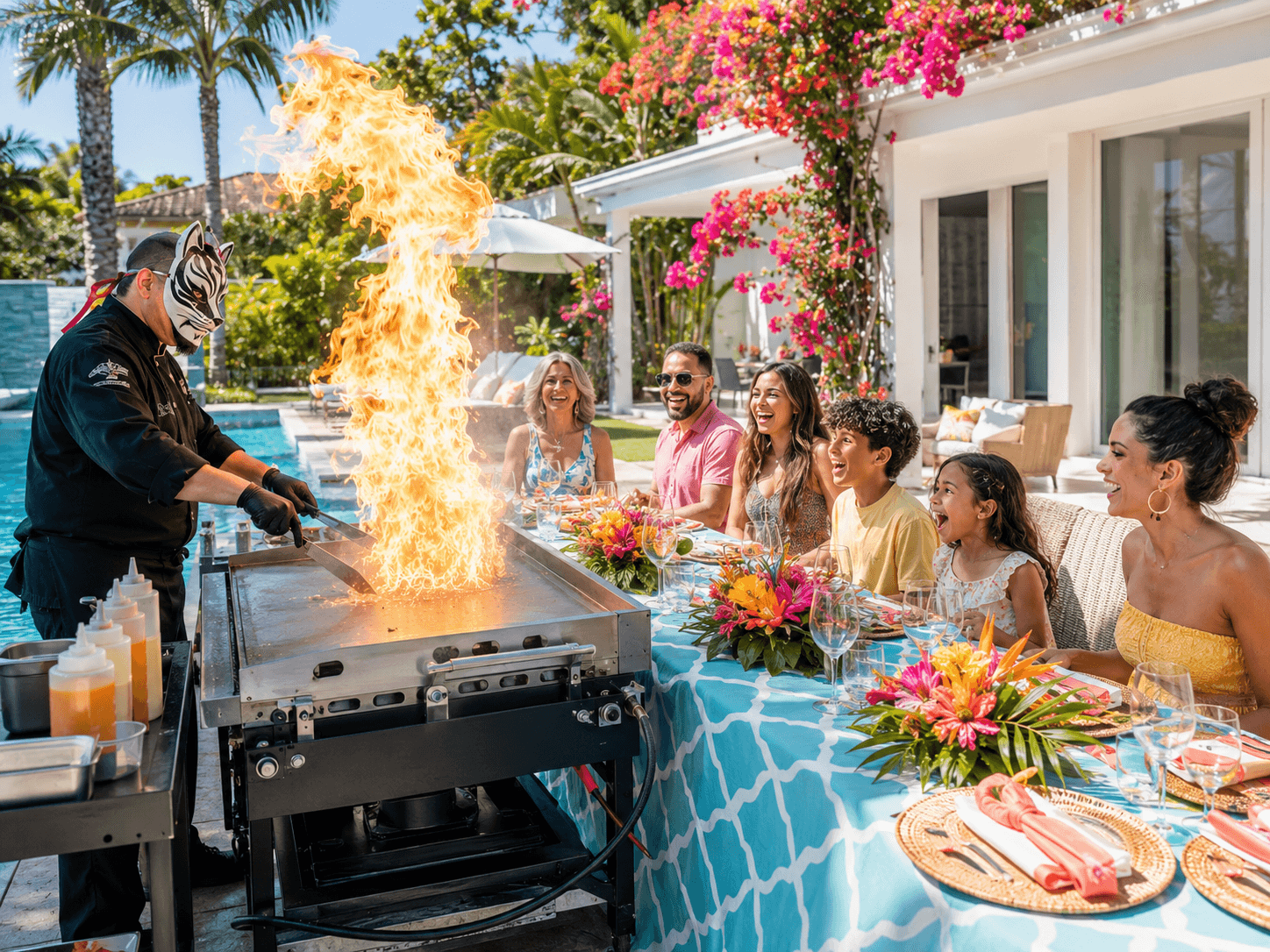
If you've ever eaten hibachi and wondered why it tastes so different from anything you make at home, the answer is a combination of ingredients, technique, and heat. The flat iron griddle at extremely high temperatures creates a distinct sear and caramelization you simply can't replicate on a standard stovetop. But the ingredients themselves matter just as much — and they're simpler than most people expect.
Here's a complete breakdown of what goes into a professional hibachi meal.
The Proteins
The protein is the centerpiece of every hibachi plate. Standard options at most hibachi catering events include:
- Chicken — typically boneless breast or thigh, cut into bite-sized pieces
- Steak — sirloin or NY strip, sliced thin and cooked to order
- Shrimp — large shrimp, shell-off, cooked quickly over high heat
- Salmon — skin-off fillet, often cooked with lemon butter
- Scallops — seared hard on one side for a golden crust
- Tofu — firm tofu, pressed and cut into cubes, absorbs seasoning beautifully
- Filet mignon (premium) — the most tender beef cut, sliced and seared in butter
- Lobster tail (premium) — split and cooked in garlic butter tableside
Each protein is cooked separately on the flat-top with its own seasoning, so flavors don't mix unless a guest specifically requests it.
The Core Protein Seasoning
This is the secret to why hibachi tastes the way it does. Every protein gets the same foundational treatment:
- Soy sauce — the backbone of hibachi flavor. Adds salt, umami, and that characteristic dark color to the sear.
- Butter — real butter, not oil. Butter gives hibachi its richness and helps create the golden crust on proteins.
- Garlic — minced fresh garlic, added directly to the grill. The high heat blooms the garlic quickly and infuses the protein.
- Sesame oil — a small amount, added near the end of cooking. Provides the nutty, aromatic finish.
- Lemon juice — a squeeze over shrimp, scallops, and salmon brightens the flavor.
- Salt and black pepper — basic seasoning applied before cooking.
This combination — soy sauce, butter, garlic — is the core flavor profile of nearly every protein in American hibachi cooking. It's simple, but the high heat and flat-top surface create a Maillard reaction (the browning/searing process) that takes the flavor to a completely different level than cooking the same ingredients in a pan at home.
Hibachi Fried Rice Ingredients
Hibachi fried rice is one of the most distinctive parts of the meal. The ingredients:
- Day-old cooked white rice — the most important ingredient. Fresh rice has too much moisture and turns mushy. Day-old rice has dried out slightly, which lets it fry properly and get those crispy edges.
- Eggs — cracked directly onto the hot griddle, scrambled quickly, then folded into the rice
- Soy sauce — added while tossing the rice on the griddle
- Butter — coats the rice as it fries
- White or yellow onion — diced and cooked into the rice
- Garlic — minced, cooked with the onion before adding rice
- Sesame oil — a small finishing drizzle
- Green onion (scallion) — sliced thin and added at the end for freshness and color
The key to hibachi fried rice is the griddle temperature. The flat-top runs extremely hot — far hotter than a home wok — which is what creates the slightly crispy, toasty exterior on the rice grains.
Hibachi Vegetable Ingredients
The vegetable medley is straightforward but cooked with the same core seasoning as everything else:
- Zucchini — sliced into half-moons or coins
- White onion — cut into wedges or thick slices
- Mushrooms — whole or halved, depending on size
- Broccoli — cut into florets
- Bean sprouts — sometimes added for texture
Vegetables are cooked in garlic butter and soy sauce, same as the proteins. The high heat gives them a slight char on the outside while keeping them tender inside.
The Sauces
The sauces are what most people remember most about hibachi. Two are standard at virtually every hibachi event:
Yum Yum Sauce (White Sauce / Shrimp Sauce)
The iconic creamy sauce that most guests ask for extra of. Ingredients typically include:
- Mayonnaise (the base)
- Tomato paste or ketchup (for color and a subtle sweetness)
- Rice vinegar or white vinegar
- Garlic powder
- Paprika
- Sugar
- Water (to thin to desired consistency)
- Sometimes: butter, hot sauce, or cayenne for a slight kick
Yum yum sauce is made in advance, not cooked on the grill. It's served cold or room temperature as a dipping sauce for everything — protein, rice, and vegetables.
Teriyaki Sauce
A sweet soy-based glaze used for drizzling or dipping. Basic ingredients:
- Soy sauce
- Mirin (sweet rice wine) or sugar
- Sake or water
- Sometimes: cornstarch to thicken
Ginger Dressing
Used on the garden salad and sometimes as an additional dipping sauce. Made with fresh ginger, soy sauce, rice vinegar, oil, and a small amount of sugar.
Hibachi Chicken Seasoning Specifically
Because "hibachi chicken seasoning" is one of the most searched hibachi topics, here's the exact flavor profile:
Hibachi chicken gets: butter + garlic + soy sauce applied to the griddle first, then the chicken goes on. As it cooks, more soy sauce is added. A splash of sake or rice wine is sometimes added mid-cook. The chicken is finished with sesame oil and sometimes a squeeze of lemon. The result is savory, slightly caramelized, with a rich garlic-butter aroma. There's no dry spice rub — the flavor comes entirely from the wet seasonings and the high-heat sear.
Why Does Hibachi Taste Different From Home Cooking?
Three reasons:
- Temperature — professional hibachi griddles reach 450–550°F. Home stovetops top out around 350–400°F. The extra heat creates a sear that's impossible to replicate at home.
- Surface area — cooking everything on a large flat surface simultaneously means flavors mingle slightly, creating a more complex overall taste.
- Technique — professional chefs know exactly when to add each ingredient and how to layer the flavors in sequence. The timing matters as much as the ingredients.
Experience It at Your Home
At HibachiLover, our chefs bring all the ingredients — fresh proteins, day-old rice, vegetables, sauces, and seasonings — and cook everything live in front of your guests. You get the full hibachi flavor experience without sourcing a single ingredient.
Pricing starts at $55/adult, $30/child. Get an instant estimate or book your private hibachi event online. We serve 27 states.